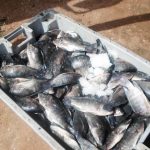
Fish is an important food product in Ghana, accounting for 60 percent of the national dietary animal protein. Increasing urbanization and corresponding dietary shifts have fueled rapid increases in demand for certain types of fish. In Accra, for example, consumers have shifted in recent years from salted and smoked fish to consuming large quantities of […]
Improving the competitiveness of Ghana’s vegetable sector
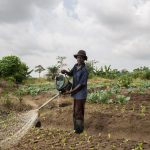
Vegetables make up a large proportion of food consumption in Ghana comprising 12.8% of food expenditure (GLSS 2012/13). However, despite favorable agro-ecological conditions, local vegetable production fails to meet demand. Low yields and restricted access to marketing networks characterize the vegetable sector in the country, presenting a challenge as far as competitiveness and production incentives […]
Book launch: Ghana’s cocoa industry contends with growth, poverty

Ghana’s cocoa industry has achieved consistent growth, but low global market prices, a lack of management transparency, and a shortage of younger farmers loom as major challenges.
Testing agricultural technologies in Northern Ghana

In 2015, IFPRI collaborated with Innovations for Poverty Action (IPA) and the Savanna Agricultural Research Institute (SARI), a Council for Industrial and Scientific Research (CSIR) research institute, to set up demonstration plots to test the productivity of maize varieties in Northern Ghana. Maize is an important food cereal in Ghana, but productivity is low. One […]
Picking winners in agriculture depends on policy objectives

It is common for developing country governments or development partners to identify priority agricultural subsectors or value chains that receive targeted support to achieve policy objectives. In Ghana, for example, the new administration has prioritized the maize, rice, sorghum, soya and vegetables value chains under its Planting for Food and Jobs initiative. But how are […]
- « Previous Page
- 1
- …
- 7
- 8
- 9
- 10
- Next Page »