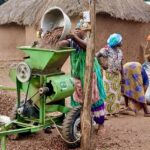
Women in northern Ghana use a dehusking machine to process shea nuts. Photo Credit: Bedru Balana/IFPRI By Futoshi Yamauchi, Bedru Balana, Hazel Malapit, Eduardo Maruyama, Doreen Kufoalor, Sena Amewu, Seth Asante, and Samson Dejene Key takeaways In northern Ghana, shea trees—locally known as “women’s gold”—have anchored rural livelihoods for generations. The tree’s oil-rich nuts are an […]
National Validation Workshop on Ghana’s Agrifood Systems Transformation under the CAADP Kampala Declaration

Organized by IFPRI and partnersDate 28th – 29th July 2026Venue: Mensvic Grand Hotel, Accra, Ghana Ghana enters the Kampala Declaration implementation period with strong institutional foundations, extensive experience with the Comprehensive Africa Agriculture Development Programme (CAADP), and well-established systems for agricultural planning, sector review, and stakeholder engagement. Building on progress made during the Malabo Declaration […]
Tiseed Project Dissemination Workshop

Ghana is West-Africa’s top producer of tilapia. Growth in Ghana’s aquaculture sector is being driven mainly by large-scale cage tilapia farming in Lake Volta. Tilapia contributes over 77% of cultured fish production, the second being African catfish at 22%. Unfortunately, participation of, women, and youth in this rapidly growing value chain is very limited. About […]
Impact of fish feed formulation training on feed use and farmers’ income: Evidence from Ghana
Feed accounts for 60–80% of tilapia production costs, and high feed cost and limited feed access are major issues faced by fish farmers. A potential solution is for farmers to produce their own feeds using cheaper and locally available ingredients. This paper evaluates the feed formulation training implemented in Ghana as part of the Fisheries […]
Value Chain Development to benefit smallholders in Ghana: The effectiveness of selected interventions

Value chains are series of activities or processes that aim at creating and adding value to any product at every step during the production process. How, where, and when might it be appropriate to intervene in value chains, particularly to benefit smallholders? In their paper on value chain development, Shashi Kolavalli and co-authors examined interventions […]
- 1
- 2
- 3
- …
- 12
- Next Page »